
RBI expected wholesale prices-based inflation, which is near the double-digit region now, to moderate over the next few months but warned of upside risks owing to firming global commodity prices, particularly oil.

Among the Sensex firms, JSW Steel, Tata Steel, Tech Mahindra, Infosys, Wipro, Tata Consultancy Services, Nestle, HCL Technologies, HDFC Bank and Maruti were the major laggards. IndusInd Bank, ITC, Bharti Airtel and State Bank of India were among the winners.

RBI's latest rate cut is positive for the economy.

The Finance Ministry expects the economic growth in the current fiscal to improve to 5.5 per cent from 5 per cent last year on back of likely pick up in agricultural output on account of good monsoon rains.

The tax department surveyed the office of the news portal located at Sarvodaya Enclave in south Delhi on Friday along with that of another digital news platform Newsclick in Saidulajab area (south Delhi) on charges of alleged tax evasion.

'Dynastic politics has become a tool of convenience for political parties. The BJP does not hesitate to accept it when it comes to its own alliance or party candidates. The same goes for the others.'

In many must-win battleground states, Indian Americans comprise a substantial and potentially decisive share of the electorate: 190,000 potential voters in Florida, 120,000 in Michigan, 170,000 in Pennsylvania, 150,000 in Georgia, 110,000 in North Carolina, 165,000 in Virginia, and nearly 470,000 in Texas.

'The government should act proactively to instil confidence in the private investors, and also boost the purchasing power of people directly or indirectly by ensuring minimum wages.'

Most Indian chief executives are optimistic about the economy and believe it would improve in the coming 12 months, said a survey by consulting and auditing firm PwC on Tuesday. The company's 27th annual global survey polled 4,702 chief executive officers (CEOs) in 105 countries and territories, including 79 in India, from October 2 to November 10, 2023. As many as 86 per cent of CEOs in India - 30 per cent higher than a year ago - are confident that the economy would improve.

Fitch Ratings on Thursday raised its forecast for India's economic growth to 7 per cent for the next fiscal year starting April 1 on the back of strong domestic demand and sustained level of business and consumer confidence. With a stronger-than-expected 8.4 per cent growth in gross domestic product (GDP) during the third quarter (October-December) of the current fiscal year, Fitch saw the Indian economy expanding 7.8 per cent in 2023-24 financial year (April 2023 to March 2024), marginally higher than the government's estimate of 7.6 per cent.
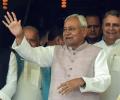
Bihar Chief Minister Nitish Kumar on Tuesday announced his intent to raise quotas for Other Backward Classes, Scheduled Castes and Scheduled Tribes in the state, saying a legislation to the effect is likely to be brought in the ongoing assembly session.

Retirement planning and secondary sources of income have become key financial priorities for Indians, as they look to prepare for higher inflation, health concerns, and economic slowdown risks. PGIM India Mutual Fund's Retirement Readiness Survey shows that at present 67 per cent Indians have their retirement plan in place, compared to 49 per cent in 2020. "The pandemic was probably the factor making people realise the importance of saving and investing, leading to an increase in people planning for it.

Investment in infrastructure was necessary for the economy, as power shortages, inadequate transport and poor connectivity affect overall growth performance, as per the Economic Survey 2019-20 tabled in Parliament by Union Finance and Corporate Affairs Minister Nirmala Sitharaman. "To achieve GDP of USD 5 trillion by 2024-25, India needs to spend about USD 1.4 trillion (Rs 100 lakh crore) over these years on infrastructure so that a lack of infrastructure does not become a constraint to growth," it said.

Generative AI (GenAI) has the potential to add a cumulative $1.2-1.5 trillion to India's GDP over the next seven years, according to a report by EY. The report titled 'AIdea of India: Generative AI's potential to accelerate India's digital transformation' says that in 2029-30 alone, GenAI can contribute an additional $359-438 billion to India's GDP. The report said that around 69 per cent of the overall impact of GenAI on India's GDP is expected to be derived from sectors such as business services (including IT, legal, consulting, rental of machinery and equipment, and others), financial services, education, retail, and healthcare.

The primary market has seen hectic fundraising activity in April-November 2021, with 75 companies garnering Rs 89,066 crore through their IPOs, much higher than in any year in the last decade, Economic Survey showed on Monday. Moreover, a flurry of technology startups made their public debuts during the period. In comparison, 29 companies raised Rs 14,733 crore through initial public offerings (IPOs) during April-November 2020.

ONGC was the top laggard in the Sensex pack, dropping 5.80 per cent, followed by PowerGrid, HCL Tech, TCS, Tata Steel and Reliance Industries.

Markets rallied because of huge inflows by overseas investors.

'We are very watchful about inflation and growth. But the main challenge is economic revival and growth.'

Prime Minister Narendra Modi on Sunday suggested that if the Congress comes to power, it would redistribute wealth of people to Muslims and cited former PM Manmohan Singh's remark that the minority community had the first claim on the country's resources.

The services sector growth in India fell to a one-year low in November on softer expansions in new work intakes and output, despite receding price pressures, a monthly survey said on Tuesday. The seasonally adjusted S&P Global India Services Business Activity Index fell from 58.4 in October to a one-year low of 56.9 in November. Despite witnessing a month-on-month decline, the rate of expansion was stronger than its long-run average.

Watch all the proceedings and live debates.

The findings of the report showed consumer spending falling for the first time in over four decades in 2017-18. The government has, however, termed it a "draft" report, reports Somesh Jha.

Finance Minister Nirmala Sitharaman will have to do a tight-rope walk between staying fiscally prudent and general public expectations of lower taxes and a wider social security net, while at the same time firing the engines of the economy before general elections. Sitharaman will on Wednesday present her fifth straight Budget at a time when the economy is slowing due to global headwinds and specific sectors need attention. In the run-up to the Budget presentation, expectations are rife that she may tweak income-tax slabs to provide relief to the middle class and increase spending on the poor through programmes such as the rural job scheme while ramping up financial incentives for local manufacturing.
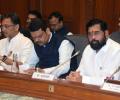
A substantial number of castes and groups are already placed in the reserved category, getting about 52 per cent of reservations altogether. It would be completely inequitable to place the Maratha community in the Other Backward Class (OBC) category, it said.

This is the lowest that the BCI has ever fallen in the history of 113 rounds of the NCAER Business Expectations Survey.

India's manufacturing sector continued with its robust performance in November, mainly on the back of substantial easing in price pressures and strengthening demand from clients, a monthly survey said on Friday. The strong performance of the manufacturing sector is expected to continue in 2024 as well. The seasonally adjusted S&P Global India Manufacturing Purchasing Managers' Index (PMI) rose to 56 last month from the eight-month low level of 55.5 recorded in October.

The two major parties offer the United States choices that are basically unacceptable and the bench strength, such as it is, is not entirely capable of winning popular acclaim, notes Shreekant Sambrani.

Ahead of the upcoming elections, political parties have started announcing incentives to benefit women, but what do women truly seek for genuine gender parity, asks Nivedita Mookerji.

The services sector growth in India rose to a 13-year high in September on sharp increase in new business amid strong demand conditions, and job numbers continued to increase as overall business mood improved, a monthly survey said on Thursday. The seasonally adjusted S&P Global India Services PMI Business Activity Index rose from 60.1 in August to 61 in September, signalling a sharp upturn in output. In Purchasing Managers' Index (PMI) parlance, a print above 50 means expansion while a score below 50 denotes contraction.
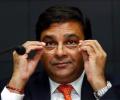
Various global and domestic factors had a sizable impact on the performance of the Indian markets

Online video platform YouTube's ecosystem has contributed over Rs 10,000 crore to India's GDP and supported more than 7.5 lakh full-time equivalent jobs in the country, according to a report. In India, over 4,500 channels had over 10 lakh subscribers and the number of YouTube channels in India making Rs 1 lakh or more in their annual revenue increased by over 60 per cent year-over-year in 2021, the YouTube Impact Report based on analysis by Oxford Economics said. "YouTube's creative ecosystem contributed over Rs 10,000 crore and supported more than 7,50,000 full-time equivalent jobs in the Indian economy in 2021. "That economic impact shows up in four ways, through direct, indirect, induced, and catalytic impacts," the report said.
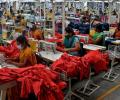
Enthused by higher than expected GDP numbers in the fourth quarter of 2022-23, Chief Economic Adviser (CEA) V Anantha Nageswaran on Wednesday said India's economic growth may exceed the initial estimate of 6.5 per cent in the current fiscal and the country can look for another year of solid economic performance.
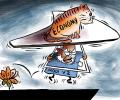
The country's new economic roadmap highlights the importance of creating a virtuous cycle of investment, savings and exports in order to sustain rapid economic growth over the next five years.

According to the IHS Markit India Business Outlook, predictions of softer activity growth underpin the downward revisions of profit outlook, subdued hiring plans and relatively muted capital expenditure.

Most economists expect the global economy to weaken in the coming year amid political and financial volatility, but a large majority of over 90 per cent are confident of moderate or strong growth in South Asia, notably India, a survey showed on Friday. At the same time, the outlook for China has dimmed following signs of deflationary pressures and fragility in the country's real estate market, the World Economic Forum's latest 'Chief Economists Outlook' report said. As the world grapples with political and financial volatility, almost six in 10 believe the global economic outlook will undermine progress towards meeting the UN Sustainable Development Goals (SDGs), with 74 per cent saying geopolitical tensions will have the same effect.

"Contradicting the emerging narrative, Indian-Americans remain committed to the Democratic Party. Nearly three-quarters of registered Indian-American voters intend to support Joe Biden this Fall, compared to just 22 per cent for Donald Trump," it said.
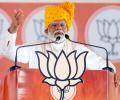
In the coming days, unless Modi tones down the communal spiel, it will be clear that anxiety continues to drive his mind and clouds his judgment, observes Modi biographer Nilanjan Mukhopadhyay.
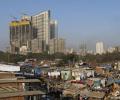
The fiscal gains from implementing the GST and demonetisation, while almost certain to occur, will probably take time to be fully realised

Chief Economic Advisor (CEA) V Anantha Nageswaran on Thursday said describing India's recovery as 'K-shaped' was wrong as both rural and urban economies were recovering, albeit at different paces. Speaking to reporters at the Finance Ministry, Nageswaran said the gross domestic product (GDP) growth print for the recent October-December quarter (Q3FY23) will likely be revised upwards. "The notion of using the letter 'K' to denote urban and rural is somewhat wrong because it is almost as if one is growing and one is contracting. "I would say one segment's slope is more positive, and the other one slope is less positive but it is positive," Nageswaran said.

Well, if Economic Survey of Bihar for 2006-07 is to believed, the impoverished state of Bihar has recorded a GDP of 16 per cent!
 © 2026 Rediff.com - Investor Information - Advertise with us - Disclaimer - Privacy Policy - Sitemap - Feedback - About us - Terms of use - Grievances